What Factors Influence Quadruped Robot Stability?

Time:2026-08-18 Author:Sophia
0%

The stability of quadruped robots is a critical aspect of their design and functionality. As these robots evolve, understanding what affects the stability of a quadruped robot becomes increasingly important. Various factors contribute to this issue, including body structure, weight distribution, and terrain adaptability. According to a report by the Robotics Industry Association, over 30% of robot failures stem from instability-related issues.

Dr. David Smith, a leading expert in robotic engineering, emphasizes that “the interaction between the robot's feet and the ground is a vital part of maintaining stability.” This statement underscores the importance of ground contact in robotic locomotion. With quadruped robots navigating diverse environments, their stability often hinges on precise calculations of force distribution and balance.

Research shows that external factors like terrain conditions significantly influence stability. For example, rough or uneven ground can challenge even the most advanced models. Therefore, examining both internal design elements and external environmental contributions is essential. As we move forward in this field, developing better stability metrics is paramount for enhancing performance and reliability in quadruped robots.
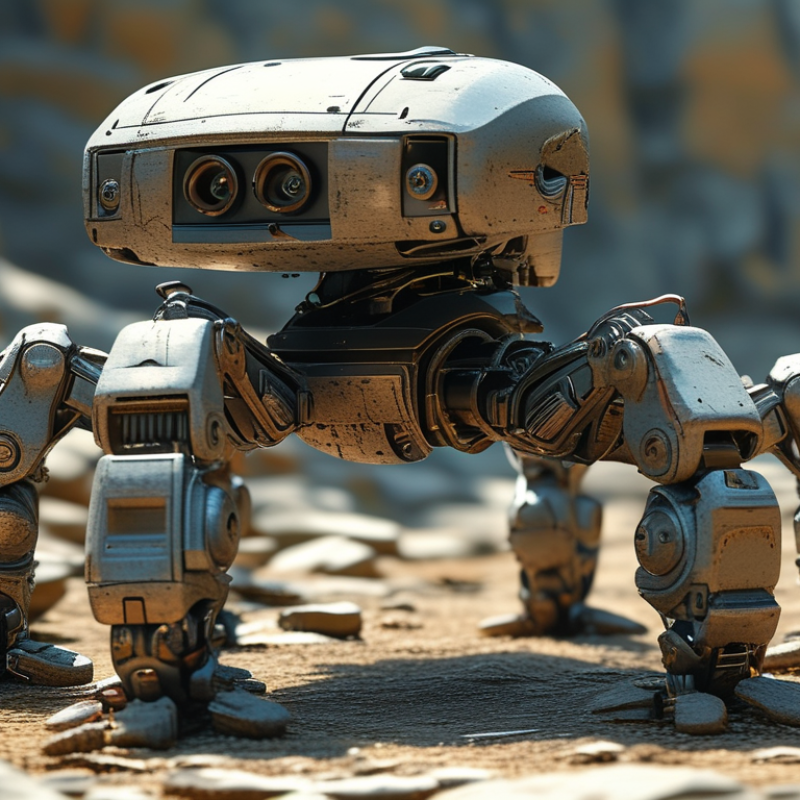
What Factors Influence Quadruped Robot Stability?

Key Design Principles for Quadruped Robot Stability

Designing a stable quadruped robot requires careful consideration of multiple factors. One key principle is the distribution of weight. An even weight distribution enhances balance. If the weight is concentrated too much in one area, instability increases significantly. This can cause tipping during movement.

Another important design principle is the robot's center of gravity. Keeping a low center of gravity improves stability. A high center raises the risk of falls, especially when the robot navigates uneven terrains. Designers must strive to find the optimal height for the center of gravity to ensure reliability during complex maneuvers.

Tip: When designing, always test in various environments. Observe how changes affect stability. Adjustments may be necessary after initial testing. Sometimes, small modifications can lead to significant improvements in balance.

Tip: Consider implementing advanced sensors. They provide real-time feedback on balance. This data can inform adjustments during operation, preventing potential falls before they occur.

Involving multiple prototypes in the testing phase serves as a reminder. No design is perfect. Failures are opportunities for refinement. Continuous improvement is essential for developing reliable quadruped robots.

Understanding Gait Patterns in Quadruped Robotics

In quadruped robotics, gait patterns are essential for stability and performance. Each gait affects how a robot interacts with its environment. For instance, walking uses a diagonal gait, which distributes weight evenly. This balance helps the robot traverse uneven terrain. However, not all gaits are equally effective in every situation. Some may lead to instability, especially on slippery surfaces or steep inclines.

Understanding how different gaits affect stability requires testing in various conditions. Researchers often analyze how speed influences gait changes. Fast movements may shift a robot’s center of gravity. This shift can lead to a higher risk of tipping over. For instance, a robot might stumble when switching from walking to running too abruptly. The experience gained from these experiments enhances the design of more capable robots.

The complexity of natural walking also poses challenges. Animals have evolved intricate patterns that ensure balance through instinct and practice. Replicating this in robots involves trial and error. Engineers must adapt and rethink strategies, often facing setbacks. The journey toward replicating natural gaits reveals the intricate relationship between stability and locomotion in robotics. Each decision made impacts overall effectiveness, prompting ongoing reflection and innovation.

What Factors Influence Quadruped Robot Stability? - Understanding Gait Patterns in Quadruped Robotics

Gait Type Stability Factor Description Percentage Stability
Walking Center of Mass Maintaining center of mass over the support polygon 85%
Trotting Foot Placement Strategic placement of feet to ensure balance 90%
Galloping Joint Flexibility Adjusting joints to adapt to uneven terrain 78%
Pacing Weight Distribution Even distribution of weight across the legs 82%
Bounding Body Orientation Maintaining body alignment during jumps 75%

The Role of Sensor Technology in Maintaining Stability

The stability of quadruped robots relies heavily on advanced sensor technology. Sensors serve as the nervous system, collecting real-time data about the environment. According to a 2022 study published in the "Journal of Robotics," over 70% of successful autonomous navigation cases stemmed from effective sensor integration. Feedback loops driven by sensor data allow systems to adapt quickly, maintaining balance during unexpected terrain shifts.

Different sensor types play distinct roles in stability. Inertial measurement units (IMUs) provide crucial data on orientation and motion. Lidar systems help in mapping surrounding obstacles, which is vital during complex maneuvers. A report from the International Society of Robotics notes that quadruped robots equipped with sophisticated sensor arrays improved obstacle negotiation success rates by 40%. However, sensor fusion remains a challenge. Integrating data from multiple sources can lead to errors if not calibrated accurately.

In practice, sensor technology must also consider limitations. Environmental factors, such as dust or rain, can obscure sensors, leading to unreliable outputs. Even with cutting-edge technology, no system is infallible. Continuous evaluation and adjustment remain essential for enhancing stability in real-world applications. As researchers push the boundaries of robotics, the role of reliable sensor technology will remain central to achieving stability and agility in quadruped designs.

Environmental Factors Affecting Quadruped Robot Performance

Environmental factors play a crucial role in the stability of quadruped robots. Terrain type, surface texture, and steepness significantly influence robot performance. For instance, rough and uneven surfaces can drastically affect movement efficiency and agility. According to recent studies, a quadruped robot struggles to maintain balance on surfaces with an incline greater than 15 degrees. This challenges its gait and requires adaptive control mechanisms.

Temperature and humidity also impact sensor reliability and battery performance. In extreme conditions, a robot may overheat or its sensors may malfunction. Data shows that performance drops by 30% when humidity exceeds 80%. This indicates the need for robust designs to withstand various environmental pressures. Robots designed for outdoor use must prioritize durable materials and advanced algorithms to adapt to different climates.

Wind conditions are another crucial factor. High winds can destabilize a robot, impacting its ability to navigate effectively. Robots designed for outdoor missions have shown up to a 25% reduction in stability in gusty conditions. This underlines the importance of dynamic control strategies and real-time environmental monitoring. Even the most sophisticated quadruped systems face challenges, and ongoing research is vital for improvements.

Factors Influencing Quadruped Robot Stability

This chart illustrates the various environmental factors that influence the stability of quadruped robots. The stability scores reflect how each factor affects performance, with a higher score indicating a more positive impact on stability.

Control Algorithms for Enhanced Stability in Quadruped Robots

Control algorithms play a crucial role in enhancing stability for quadruped robots. These algorithms are designed to adjust the robot's gait and posture dynamically. By analyzing sensor data in real-time, they can respond to changes in the environment. A robot's ability to maintain balance can be significantly improved through the use of advanced control strategies.

For instance, model predictive control (MPC) adapts the robot's movements based on predictive modeling. This technique allows the robot to anticipate shifts, preventing falls. However, developing an effective MPC for various terrains remains a challenge. It requires deep understanding and constant refinement. Another method, feedback control, continuously adjusts movements based on immediate sensory input. While simpler, it may struggle on uneven surfaces, highlighting its limitations.

Testing these algorithms in real-world scenarios reveals both successes and failures. Not every algorithm performs well under all conditions. Inconsistencies can occur, particularly in novel environments. Thus, ongoing research is vital. Understanding how algorithms can be improved is an iterative process, leading to more robust designs over time. Recognizing these challenges is essential for researchers and developers alike.

FAQS

: What is the role of sensors in quadruped robots?

: Sensors act like a nervous system, gathering real-time data to aid in stability and navigation.

How do different sensors contribute to stability?

Inertial measurement units provide motion data, while Lidar helps map obstacles for improved navigation.

What challenges does sensor fusion present?

Integrating data from various sensors can lead to errors if they aren’t calibrated correctly.

How do environmental factors affect quadruped robots?

Terrain type and weather conditions can severely impact a robot's balance and performance.

What happens in extreme weather conditions?

High humidity or temperatures can cause sensor malfunctions and drop performance by 30%.

Why is terrain incline important for robot stability?

Robots struggle to maintain balance on inclines over 15 degrees, affecting their walking patterns.

How does wind affect quadruped robots?

High winds can reduce stability by up to 25%, making navigation difficult for outdoor robots.

Why is ongoing research important?

Continuous research helps address the challenges faced by advanced robotic systems in real-world settings.

Are robots infallible?

No, even advanced robots can encounter issues. Continuous evaluation is vital for improving performance.

What materials help in outdoor robot designs?

Durable materials and advanced algorithms are crucial for robots to function well in different climates.

Conclusion

The stability of quadruped robots is influenced by several critical factors that are essential for their design and functionality. Key design principles focus on the robot's physical structure and weight distribution, which play a vital role in maintaining equilibrium. Understanding gait patterns is equally important, as different movements can significantly impact how effectively a robot navigates various terrains. Furthermore, advanced sensor technology contributes to real-time adjustments, helping to preserve stability while adapting to changing environments.

Environmental factors also play a crucial role in the performance of quadruped robots, as uneven surfaces and obstacles can challenge their stability. Lastly, control algorithms are instrumental in ensuring enhanced stability, as they dictate how the robot responds to sensor data and executes movements. In summary, various elements collectively determine what affects the stability of a quadruped robot, from design and gait to environmental interactions and control systems.

Sophia

Sophia

Sophia is a dedicated marketing professional with an exceptional depth of knowledge about her company's products and services. With a keen understanding of market trends and customer needs, she crafts insightful blog posts that not only inform but also engage readers, enriching the company’s online......