As quadruped robots become more prevalent in various industries, understanding how to extend battery life of quadruped robots is essential. The balance between performance and battery longevity is crucial. These machines often face challenges in energy management, especially during demanding tasks.
Optimizing battery life can significantly improve operational efficiency. Simple practices can lead to remarkable results. For instance, adjusting movement patterns can enhance energy consumption. However, overlooking basic settings can lead to faster depletion of energy reserves.
With advancements in technology, researchers continually explore innovative ways to enhance battery efficiency. Their findings offer valuable insights for engineers and users alike. Each tip provided can be a step toward more sustainable robotic solutions, but they may also require iterative improvements. Reflecting on the methods and their outcomes can lead to better practices in the future.
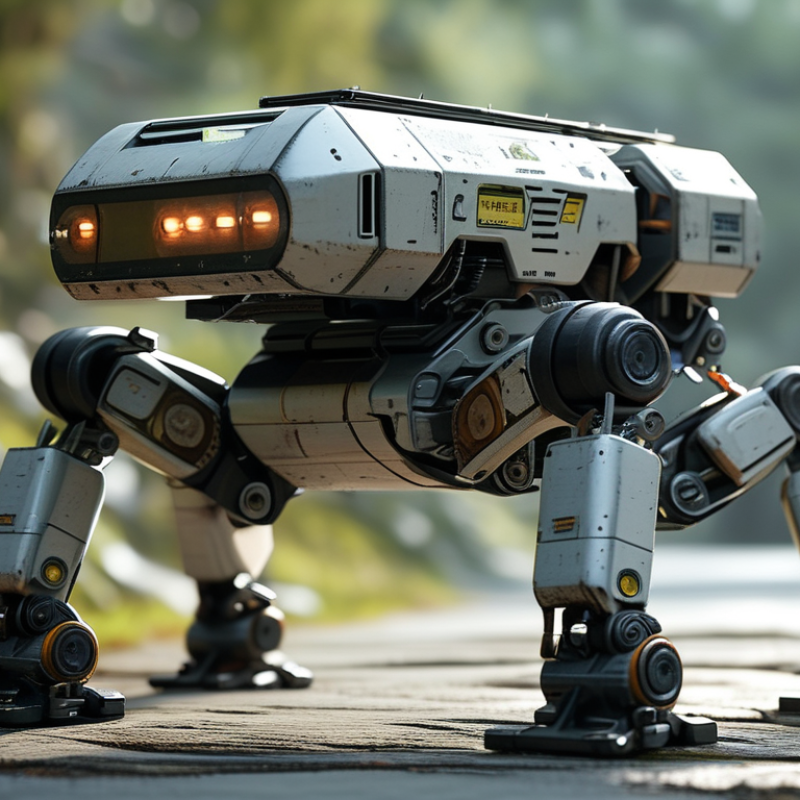
Understanding the Importance of Battery Life in Quadruped Robots
Battery life is crucial for quadruped robots. These machines rely on power for locomotion, sensing, and communication. A robot that runs out of battery mid-task can lose critical data and functionality. Engineers design these robots with power management in mind. However, users must understand these systems to maximize their performance.
Managing battery life goes beyond technical specifications. Environmental factors, such as terrain and temperature, greatly affect energy consumption. A robot climbing steep hills drains more power than one moving on flat surfaces. Also, heavy payloads require more energy. Users should adjust mission parameters based on these real-world conditions. Sometimes, expecting optimal performance without proper grants leads to disappointment.
There is a gap in practical knowledge regarding battery management. Many users underestimate the impact of software settings on battery life. Features like high-frequency data logging or intensive AI computations can quickly deplete batteries. Regularly monitoring energy usage can provide insights into improving battery efficiency. Some adjustments may seem minor, but cumulatively, they lead to substantial enhancements in performance.
Optimizing Power Consumption through Efficient Movement Strategies
Efficient movement strategies are crucial for optimizing the battery life of quadruped robots. By analyzing the movement patterns, we can significantly reduce power consumption. For instance, using a slow gait in low-energy environments minimizes energy expenditure. Fast, erratic movements typically drain battery life quickly. Consider adopting the walk instead of run, especially in complex terrains.
Adjusting the weight distribution of the robot can also help in energy efficiency. This approach requires meticulous calibration. It may take several trials to achieve optimal results, yet the payoff can be substantial. A balanced load supports smoother transitions and less strain on motors. Minor shifts in design may lead to noticeable improvements.
Implementing terrain adaptation techniques can further enhance efficiency. If the robot can assess the surface type, it can adjust its movement accordingly. For example, on soft ground, reducing speed is vital. This responsiveness can prolong battery life significantly. However, creating an adaptable system requires ongoing evaluation and fine-tuning. Constant innovation and learning are key to overcoming challenges in battery management.
Top 10 Tips to Extend Battery Life of Quadruped Robots - Optimizing Power Consumption through Efficient Movement Strategies
| Tip Number |
Tip Description |
Expected Battery Saving (%) |
Implementation Difficulty (1-5) |
| 1 |
Optimize movement algorithms for smoother transitions |
15% |
3 |
| 2 |
Reduce weight by using lightweight materials |
20% |
4 |
| 3 |
Implement sleep modes during inactivity |
25% |
2 |
| 4 |
Use energy-efficient motors |
30% |
4 |
| 5 |
Calibrate sensors to minimize power draw |
10% |
3 |
| 6 |
Enhance software to achieve better task prioritization |
18% |
3 |
| 7 |
Improve battery management systems |
22% |
5 |
| 8 |
Limit high-speed runs to essential tasks |
15% |
2 |
| 9 |
Schedule charging during idle periods |
12% |
2 |
| 10 |
Regular maintenance of hardware and software |
10% |
3 |
Maximizing Battery Capacity with Advanced Energy Management Systems
In the evolving landscape of quadruped robotics, energy management is crucial for maximizing battery capacity. Advanced energy systems can monitor and optimize power usage in real-time. This ensures efficient energy distribution across various components. Utilizing smart algorithms can enhance performance while conserving battery life.
Effective battery management begins with understanding usage patterns. Encourage regular analysis of power consumption. Adjustments may be necessary to address any fluctuations. Setting performance parameters can help maintain optimal battery health.
Utilizing regenerative braking systems can also extend operational time. These systems capture energy that would otherwise be lost. Additionally, consider softening movement strategies. Reduce abrupt motions to conserve energy and improve overall efficiency. Energy management systems should be adaptable and responsive to changing conditions.
Utilizing Regenerative Braking Techniques for Enhanced Performance
Regenerative braking is a powerful technique for enhancing the performance of quadruped robots. By harnessing energy during deceleration, these robots can recharge their batteries, extending their operational life. According to a report by the International Journal of Robotics Research, regenerative systems can improve energy efficiency by 30%. This means robots can run longer on the same charge, which is crucial for applications in difficult terrains.
Implementing regenerative braking requires precise control algorithms. These systems must quickly analyze environmental cues and adapt to varied conditions. In practice, achieving seamless transitions between propulsion and braking can be a challenge. A study published in IEEE Transactions on Robotics found that robots employing regenerative braking faced difficulties in maintaining stability during high-speed maneuvers. This highlights the need for ongoing research to refine these techniques.
Data suggests that optimizing regenerative energy capture in quadruped robots can reduce wear on mechanical components. As energy savings increase, maintenance costs can drop significantly. However, balancing energy recovery and stability remains a complex puzzle. Engineers often encounter situations where performance gains introduce new challenges. Thus, continuously revising strategies for energy management is essential for effective robotic design.
Implementing Regular Maintenance for Battery Longevity and Reliability
Maintaining the battery health of quadruped robots requires a regular and structured approach. This not only enhances battery longevity but also improves the reliability of the robot's performance. Regularly checking battery connections is crucial. Loose or corroded connections can cause issues, leading to power loss. Inspecting these connections once every month can prevent potential failures.
Temperature plays a significant role in battery lifespan. Operating the robot in extreme conditions can degrade battery performance. Ideally, keep the robot within recommended temperature ranges. A poorly maintained battery can result in unexpected shutdowns, causing the robot to malfunction during crucial tasks. It's essential to monitor battery temperature regularly to avoid these pitfalls.
Additionally, regularly recalibrating the battery management system can be beneficial. This ensures accurate readings of battery status. Some users overlook this step, leading to misinformation about battery health. A busy schedule might lead to negligence in battery upkeep. However, investing time in proper maintenance will ultimately pay off in operational efficiency and durability. Aim for consistent check-ups as part of your robot's routine care.
Battery Life Optimization Techniques for Quadruped Robots
Conclusion
In the quest to understand how to extend battery life of quadruped robots, it is essential to recognize the critical role that battery longevity plays in their overall functionality and efficiency. Employing optimized power consumption strategies through efficient movement can significantly reduce energy usage, allowing robots to operate for extended periods. Additionally, advanced energy management systems can help maximize battery capacity, ensuring that robots can tackle demanding tasks without rapid depletion.
Moreover, integrating regenerative braking techniques provides an innovative approach to enhancing performance while simultaneously conserving energy. Regular maintenance of battery systems is also vital for ensuring longevity and reliability, as it helps identify and mitigate potential issues before they escalate. By following these guidelines, users can effectively improve the operational lifespan of quadruped robots, enhancing their utility in various applications.

 Excitech Robot